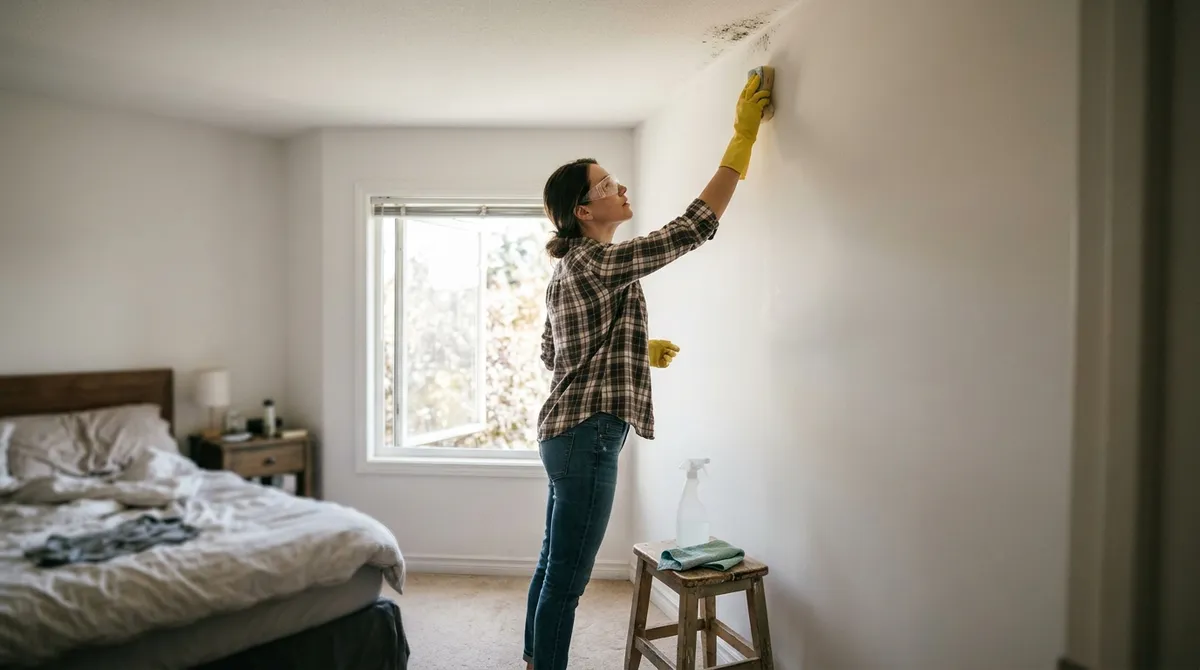
Remove Mold From Wall and Ceiling Without Ruining the Paint (and Without It Coming Back)
How to remove mold from wall: scrub the stain with water and dish soap; if it won’t come off, use plain white vinegar or well-diluted bleach, never vinegar and bleach together. Then rinse, dry thoroughly, and tackle the moisture that grew the mold that same day. A small patch, under 10 square feet, is an afternoon job at home. What decides whether it comes back next month is the air in your house, far more than the product.
You pull the dresser away from the wall to clean and there it is: a black patch the size of a plate, with a musty, closed-up smell. Or you glance up in the shower and see the ceiling over the tub speckled with dark dots. The first urge is to grab the strongest product in the house, mix it with another equally strong one and slather it on the wall. Hold on. We’ve cleaned a lot of moldy walls, and that mixing is the worst part of this plan.
Before you start: five minutes that save your wall
Is it mold or just dirt?
Mold shows up as black, green or grayish dots that merge into patches, almost always in a cold corner, behind furniture, around a window or on the bathroom ceiling. And it smells like a closed-up closet. Ordinary dirt comes off with a damp cloth and stays gone for a week. Mold comes back.
You don’t need to work out what kind of mold it is. If you see it or smell it: take it off the wall and fix the moisture.
How big is the patch?
Here is the rule of thumb that separates “I’ll do it today” from “I’m calling someone.” According to the EPA, the U.S. Environmental Protection Agency, a patch up to about 3 feet by 3 feet (under 10 square feet, or about 1 m²) is usually something a person can clean alone. Beyond that, or if the wall took major water damage, the job stops being a bucket-and-rag job.
Protect yourself first
Scrubbing mold sends spores into the air. Before you touch the wall:
- A snug-fitting N95 mask. A cloth mask won’t stop spores.
- Long gloves, up to mid-forearm. For soap and water, any rubber glove will do. With bleach, use thick natural rubber or nitrile gloves (the heavy-duty cleaning kind, not thin disposable ones).
- Goggles without ventilation holes.
- Window open and the room door closed, so the smell can get out and the spores don’t wander through the house.
Who stays away
Children, older adults, pregnant women, anyone with asthma, allergies, lung or heart disease, anyone with a weakened immune system, and pets: everyone stays out of the room while you clean. If the person with the health problem is you, talk to your doctor first and, if you can, ask someone else to do it.
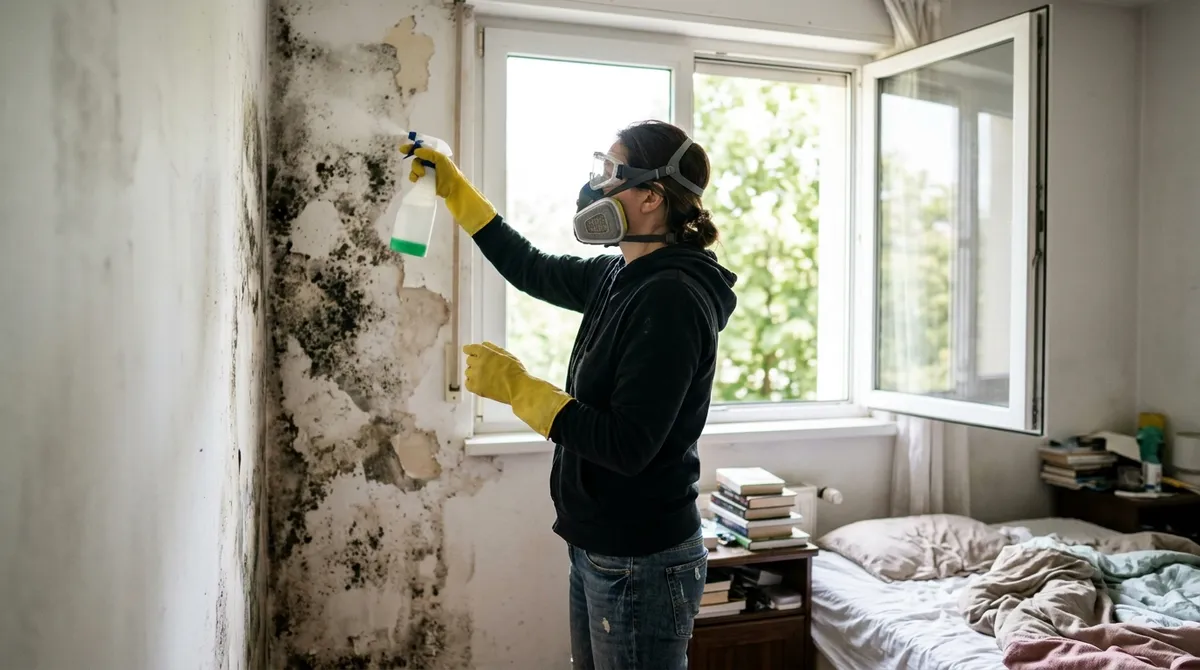
How to remove mold from a painted wall: step by step
- Move the furniture away and cover the floor with newspaper or an old cloth.
- Test in a hidden spot, behind the door or right at the baseboard, and let it dry: any product can fade paint.
- Lightly dampen the patch. Scrubbing dry mold kicks up a cloud of spores straight into your face.
- Start with the gentlest option: warm water with a few drops of dish soap, a soft sponge or a well-wrung cloth, without scraping the paint and without soaking the wall. Change the cloth when it darkens.
- If the stain holds on, move on to vinegar or diluted bleach, explained just below. One or the other, never both.
- Rinse with a clean, damp cloth.
- Really dry it. Dry cloth, window open, a fan pointed at the wall. A wall that stays damp after cleaning is an invitation for the mold to return.
- Throw away the sponge and wash the cloths separately, in hot water.
And a warning: killing the mold isn’t enough. Dead mold still releases the stuff that triggers allergies, and the dark stain stays put. Spraying and walking away leaves the problem on the wall; what works is scrubbing, removing and drying.
What to use: vinegar, bleach, baking soda or a store-bought product?
This is the question we get most. The first test is always the simplest: on a hard, smooth surface, like tile or a wall with washable paint, soap and water and a good scrub solve most cases.
Remove mold from walls with vinegar
Vinegar is the favorite of people who are afraid of staining the paint, and rightly so. For recently painted walls and for wood, it’s the best choice, explains Sherwin-Williams, a paint maker. Spray plain white vinegar, undiluted, let it sit for an hour, scrub, rinse and dry.
An hour sounds like a lot, and that’s where many people go wrong: they spray, scrub right away and conclude that vinegar doesn’t work. Does vinegar kill mold? On a painted wall it does the job, as long as you respect the waiting time and scrub afterward.
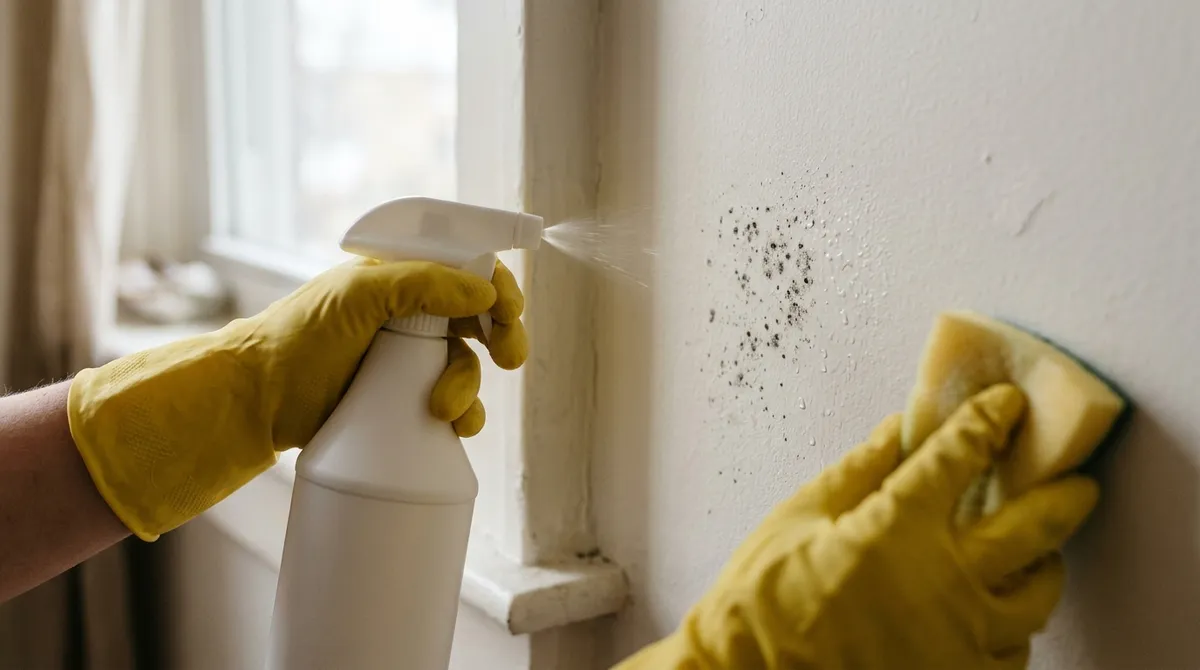
Remove mold from walls with bleach
Bleach lightens the stain fast. It works on hard, washable surfaces, with two catches: it can fade the color and force you to repaint, and lightening the stain doesn’t remove the mold, which is why it isn’t recommended as routine cleaning.
If you do use it, for cleaning, the CDC, the Centers for Disease Control and Prevention, recommends no more than 1 cup of household bleach per 1 gallon of water.
If the wall is going to be repainted anyway, one paint maker uses a stronger mix, 1 part bleach to 3 parts water, for 10 minutes, rinsing well and letting it dry completely; it can fade the color.
Concentration varies from brand to brand: read the label on your bottle and follow it; when in doubt, go with the weaker dilution. Splashed on your skin? Rinse right away with plenty of water.
Bleach or vinegar?
Light wall, old washable paint, stubborn stain: diluted bleach. Recently painted wall, bold color, wood, or fear of staining: vinegar. Never both together, and never one right after the other without rinsing in between.
Baking soda and hydrogen peroxide: does the home recipe work?
These are the recipes that circulate the most, but they don’t have the backing of the health agencies that guide mold cleanup, so nobody can guarantee the result. The safest route is to stick with dish soap, vinegar, diluted bleach or a mold-removal product. Want to try anyway? One at a time, mixed with nothing else, in a hidden spot.
Store-bought mold remover
The supermarket mold-removal spray is a good option if you don’t want to measure a dilution, and it’s an alternative to bleach. Follow the label to the letter and let the surface dry completely.
Plaster, drywall and stucco: here the story changes
A porous surface drinks in the mold. It gets into the pores of plaster, drywall panels and ceiling boards, and in there no cloth can reach it. A stain only on the surface of painted plaster may come off with a well-wrung cloth and quick drying. A panel that is soft, crumbling or has mold back a few days later probably won’t come clean: the safest route is to replace that piece.
What to never mix
“Mixing everything to make it stronger” is the most dangerous idea in home cleaning. The mix doesn’t strengthen anything and it releases toxic gas into a closed room.
- Bleach with vinegar forms chlorine gas. The same goes for any acid, including some toilet bowl cleaners and multipurpose bathroom cleaners.
- Bleach with ammonia forms chloramine, another toxic gas. Ammonia is in some glass cleaners and even in urine, human and pet: no bleach on the cat’s pee corner without washing it with plain water first.
- Bleach with any other cleaning product: don’t. Used vinegar in the morning and want to use bleach in the afternoon? Rinse the wall, dry it and use a different cloth.
Mixed them by accident or felt sick from the smell?
Burning eyes, nose and throat and coughing are the first signs. With more gas, you can get shortness of breath, wheezing, hoarseness and chest pain. People with asthma are at higher risk.
- Leave the room right away and get into fresh air, leaving doors and windows open.
- If you can, take a shower of about 20 minutes and change your clothes.
- Shortness of breath, wheezing or any serious symptom needs medical care. If the cough or the difficulty breathing continues or gets worse, call emergency services. If in doubt, call your local poison control center and tell them what was mixed.
Most people improve with fresh air in one to two hours, but shortness of breath isn’t something to wait out on the couch. A splash of the concentrated solution in the eye also needs medical care, because it can cause a burn.
Mold on the bathroom ceiling (and on tile)
The bathroom is the champion. Steam from the shower rises and meets the cold ceiling: the water condenses there every day. Keeping a bathroom completely mold-free is hard; the realistic goal is that it doesn’t grow.
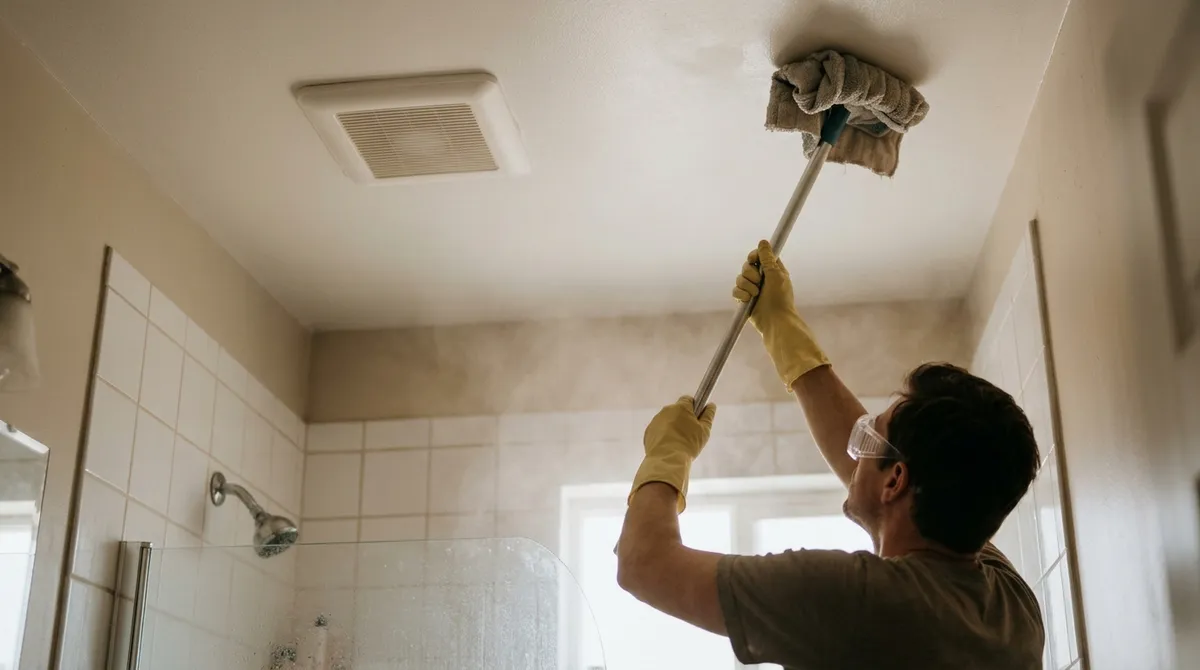
To clean the ceiling, follow the wall step by step with four precautions:
- Exhaust fan on or window open from start to finish.
- Goggles, always. The product drips toward your face.
- A long-handled mop with a cloth wrapped around it, instead of climbing on a chair. If you need a ladder, a sturdy one, never the edge of the bathtub.
- Product on the cloth, not on the ceiling. Spraying upward is asking for a shower of bleach in your eyes.
On tile, water, dish soap and scrubbing solve almost everything. On grout, which is porous, an old toothbrush reaches into the groove. Be careful with multipurpose bathroom cleaner: many are acidic and must not meet bleach. Mold that comes back on grout or shower caulk a few days after cleaning is deeply embedded, and the safest route is to redo the grout or replace the caulk.
What keeps ceiling mold from coming back is routine: fan or window open during and after the shower, a dry shower stall with a squeegee, and a light cleaning more often.
Remove mold from a bedroom wall and from behind the wardrobe
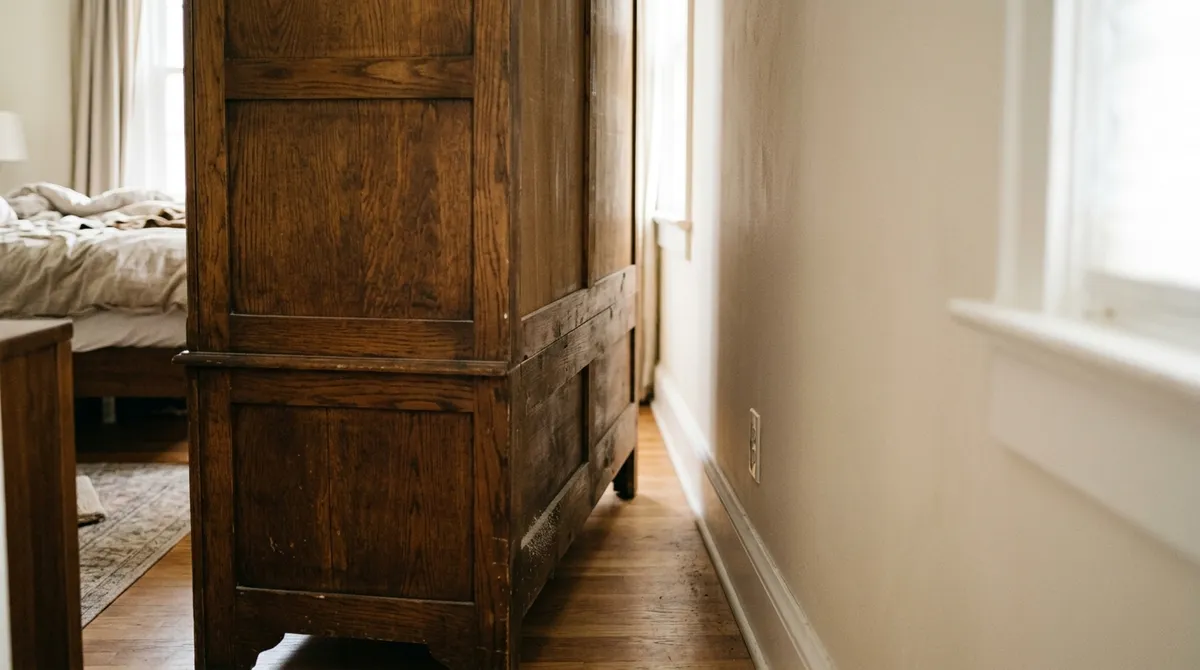
The bedroom has its own trap. The wardrobe sits flush against the exterior wall, the coldest in the house, and the humid air that gets in there, where nothing circulates, turns into water. A few rainy weeks later, the plate-sized patch appears.
- Empty and pull the furniture away, and clean the wall with the step-by-step (recent paint calls for plain vinegar).
- Check the back of the wardrobe. Stained wood or MDF is cleaned with a nearly dry cloth; mold left there contaminates the wall again.
- Dry it with the furniture pulled away, even if it takes a whole day.
- When you put it back, leave a gap of a few fingers between the furniture and the wall, especially on an exterior wall.
Is mold bad for your health?
It can be, and the risk isn’t the same for everyone. Dampness and mold inside the home are linked to more respiratory symptoms, allergies and asthma.
People who are sensitive usually get a stuffy or runny nose, sneezing, sore throat, cough or wheezing, burning or red eyes and skin irritation, right away or later. Plenty of people live with a small spot and feel nothing.
More care is needed for people with asthma or a mold allergy (mold can trigger an attack), people with chronic lung disease or a weakened immune system (who can even get a lung infection), children, older adults, pregnant women, mothers of newborns, people with heart disease and people who spend the day in bed.
Is mold bad for kids? Children are in the group that deserves more attention, and those with asthma even more. A small dot on the baseboard calls for calm and quick action: clean it soon, with the child out of the room, and fix the moisture for good. If someone in the house has a cough, wheezing or an allergy that gets worse at home and better away from it, take that observation to the doctor and mention the mold.
Why mold always comes back
Because cleaning removes the stain and leaves the cause. If the water source isn’t fixed, the mold comes back, no matter how good the scrubbing was. It’s the point every mold cleanup guide insists on most.
The most common cause inside a home is condensation. Steam from showers, cooking and clothes drying indoors turns into water when it meets a cold surface: the window frame, the corner of a wall, the wall behind furniture. You know the window that wakes up sweating? The same thing is happening on the wall, only you can’t see it.
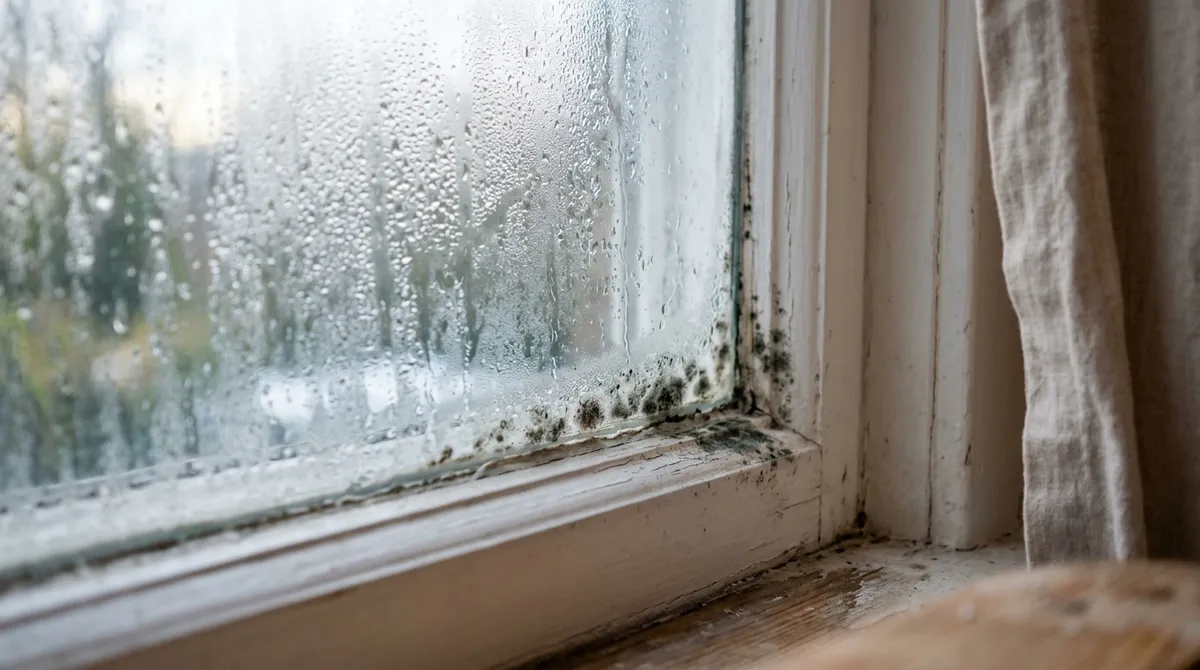
The other causes are leaks coming from outside (wall, roof, window), moisture rising from the ground, which stains the wall from the baseboard up, and a pipe leak inside the wall.
One clue helps tell them apart. A patch spread over cold corners, behind furniture and near windows tends to be condensation, and it’s solved by changing your routine. A patch that always grows in the same spot, wet to the touch, that gets worse after rain, with bubbling paint or crumbling plaster, tends to be a leak, and then the fix is a repair job, not a bucket.
How to keep mold from coming back
The goal is to keep indoor humidity below 60%, ideally between 30% and 50%; the safest route is not to go over 50% during the day. A hygrometer, that small humidity meter, costs little and shows whether your home is in that range.
What works day to day:
- Open the windows a little every day, even in the cold.
- Exhaust fan on when showering and cooking, preferably vented outside.
- Bathroom and kitchen doors closed while steam is coming out, and lids on the pots.
- Dry clothes outside the house whenever you can; a dryer only if it vents outdoors.
- Furniture pulled away from exterior walls.
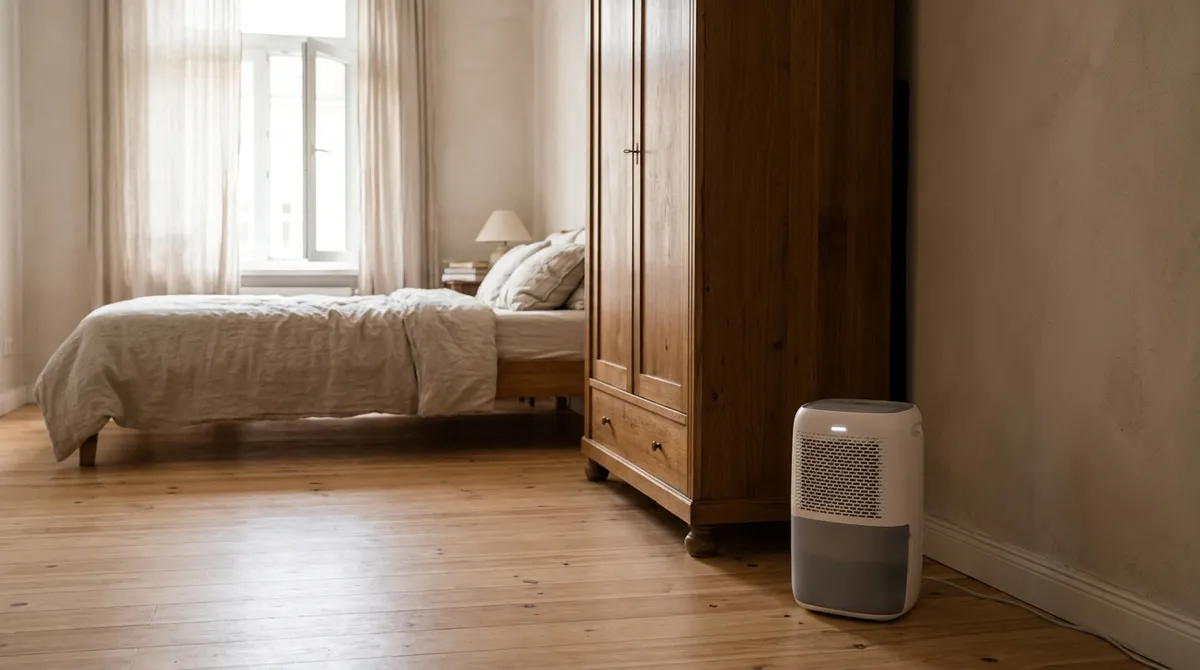
- A dehumidifier or air conditioner in rooms that are always damp, with a clean drain pan.
- Cold water pipe sweating? Insulating the pipe prevents condensation.
- Fix leaks quickly, in the roof, the wall or the plumbing.
- Wet it, dry it. A rug, wall or piece of furniture that got wet needs to dry within 24 to 48 hours so it doesn’t mold.
Can I paint over mold?
No. Paint over mold peels, and the mold keeps growing underneath. Within a few months the stain shows up again, now with bubbled paint.
The right way is to clean, let the wall dry completely (days, if it was damp), fix the moisture and only then paint. In bathrooms, kitchens, laundry rooms and cold walls, use mold-resistant paint, which comes with an agent that inhibits mold, or add a mold-inhibiting additive to the paint before applying it.
Do you have to sand before painting? If the paint stayed whole and firm after cleaning, a clean, dry wall is enough. If the paint bubbled, is peeling or is turning to powder, scrape and sand that part down to a firm surface, wearing a mask with the window open, and follow the paint label.
When to call a professional
Call someone who does this every day when:
- the patch is over 10 square feet (1 m²), or the wall took major water damage;
- the mold keeps coming back in the same spot, even with cleaning and ventilation up to date;
- there are signs of a leak: bubbling paint, a wall wet to the touch, a patch that grows after rain;
- the mold is inside the plaster, behind wallpaper or drywall;
- the smell comes from the central air conditioning. Don’t turn the system on until someone looks at it, so you don’t spread spores through the house;
- sewage water got in.
Do you rent?
Tell the landlord or property manager as soon as you notice a leak or dampness, preferably in writing, and photograph the stain before cleaning it. A small mold patch from condensation is usually the tenant’s to clean. When the cause is the building (a leak, the roof, a pipe), cleaning only the surface won’t stop it from coming back, and the repair is up to whoever takes care of the property.
Fridge-door summary
- Patch up to 10 square feet (1 m²): you can remove it at home.
- Before: N95 mask, long gloves, goggles without holes, window open, children and anyone with asthma kept away.
- Start gentle: soap and water. Recent paint: plain vinegar, one hour of soaking.
- Bleach: only diluted, following the label, on a wall that can take it.
- Never mix bleach with vinegar, ammonia or any other product.
- Felt sick from the smell: fresh air right away; shortness of breath means medical care.
- Home humidity below 60%, better between 30% and 50%.
- No paint over mold.
Start today with the window open and the fan on in the shower.
Sources
This article was written from the sources we consulted in October 2026:
- A Brief Guide to Mold, Moisture and Your Home — U.S. EPA
- Mold Cleanup in Your Home — U.S. EPA
- About Mold and Your Health — CDC
- WHO guidelines for indoor air quality: dampness and mould — World Health Organization
- Chlorine Gas — Poison Control (National Capital Poison Center)
- Why shouldn't I mix household chemicals with bleach? — Tennessee Poison Center, Vanderbilt University Medical Center
- Understanding and addressing the health risks of damp and mould in the home — GOV.UK
- How to Remove Mildew from Walls — Sherwin-Williams